From Pilot to Production: How Optatech Builds AI Systems That Actually Ship
Most AI pilots die in the demo stage. Here's a look inside three systems Optatech has actually shipped to production — and what separates a working AI system from a proof of concept.
WRITTEN BY
O
Siddharth Kothari
Managing Director
TAGS
production AI systems
AI case study India
biodiversity monitoring AI
agri-tech AI
carbon intelligence AI
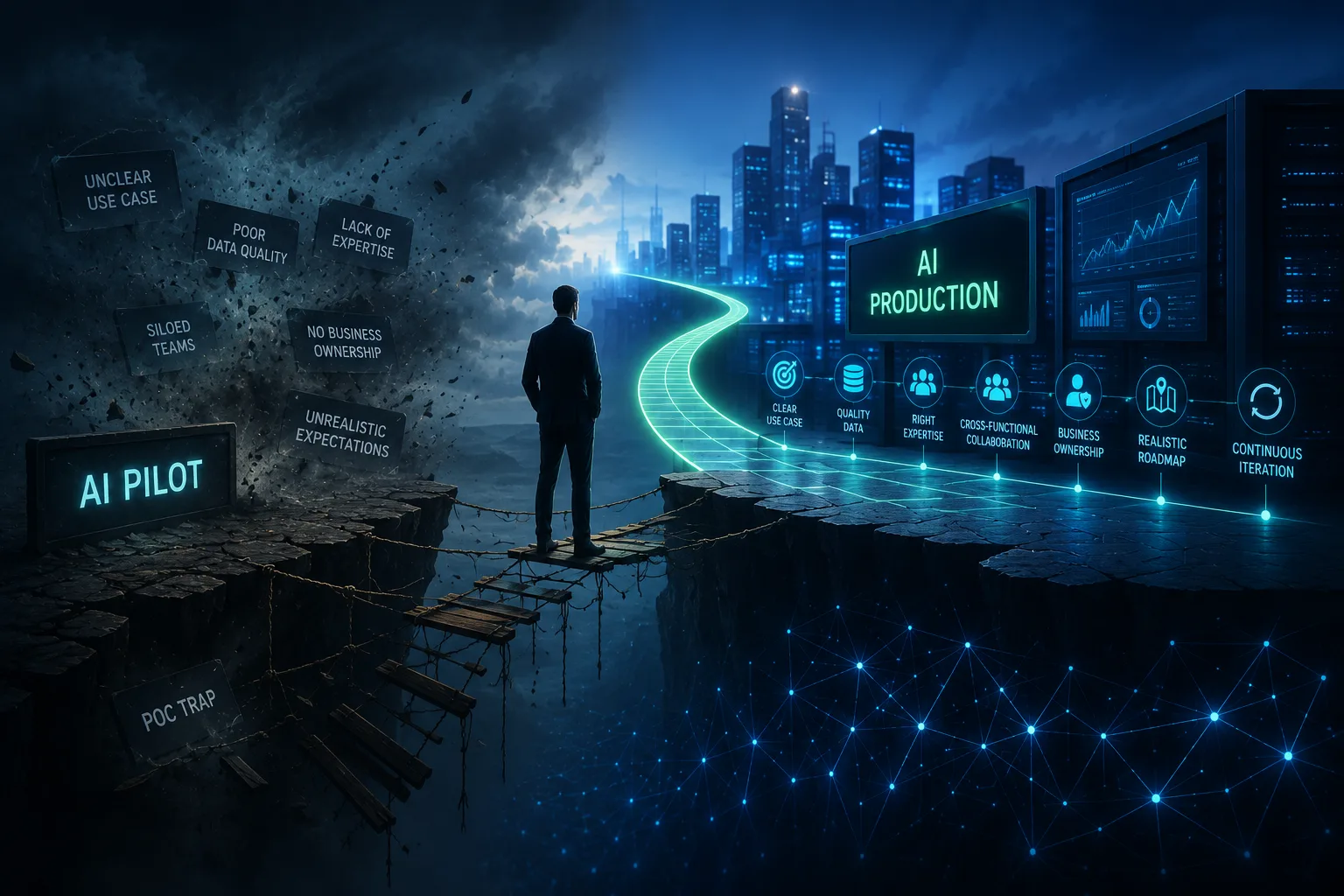
There's a well-known problem in AI development: most pilots never make it to production. Gartner and multiple industry surveys have put the failure rate of AI proof-of-concepts somewhere between 70-85% — not because the models don't work, but because nobody solved the unglamorous problems of data pipelines, edge cases, integration, and maintenance.
At Optatech, we've spent the last few years specifically avoiding that trap. Three of our systems — BioMIS, FarmVision, and CarbonVerse — are running in production today, used daily by real government departments, farmers, and sustainability teams. Here's what building each of them actually involved, and what separates a demo from a system people depend on.
BioMIS: Biodiversity Monitoring at State Scale
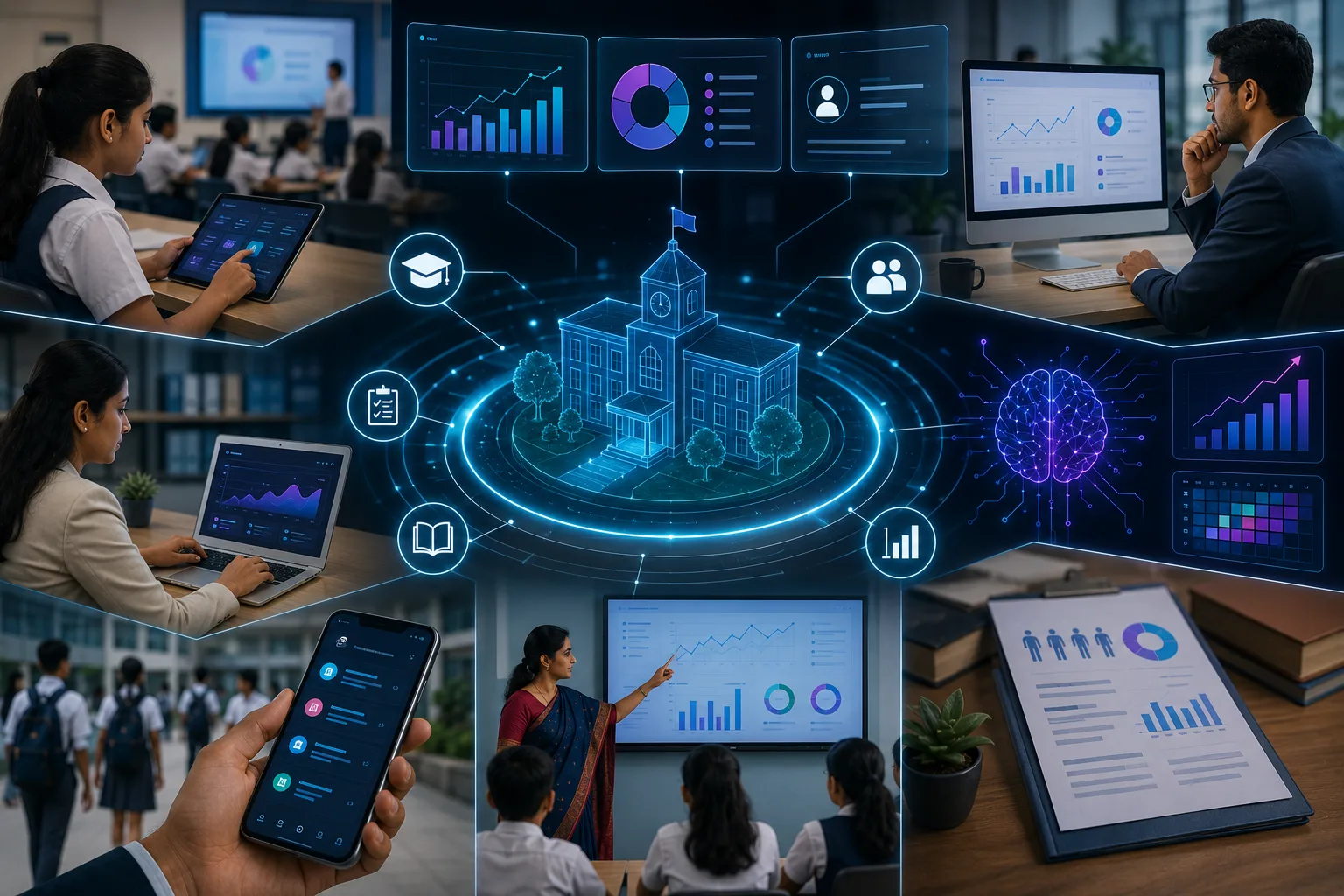
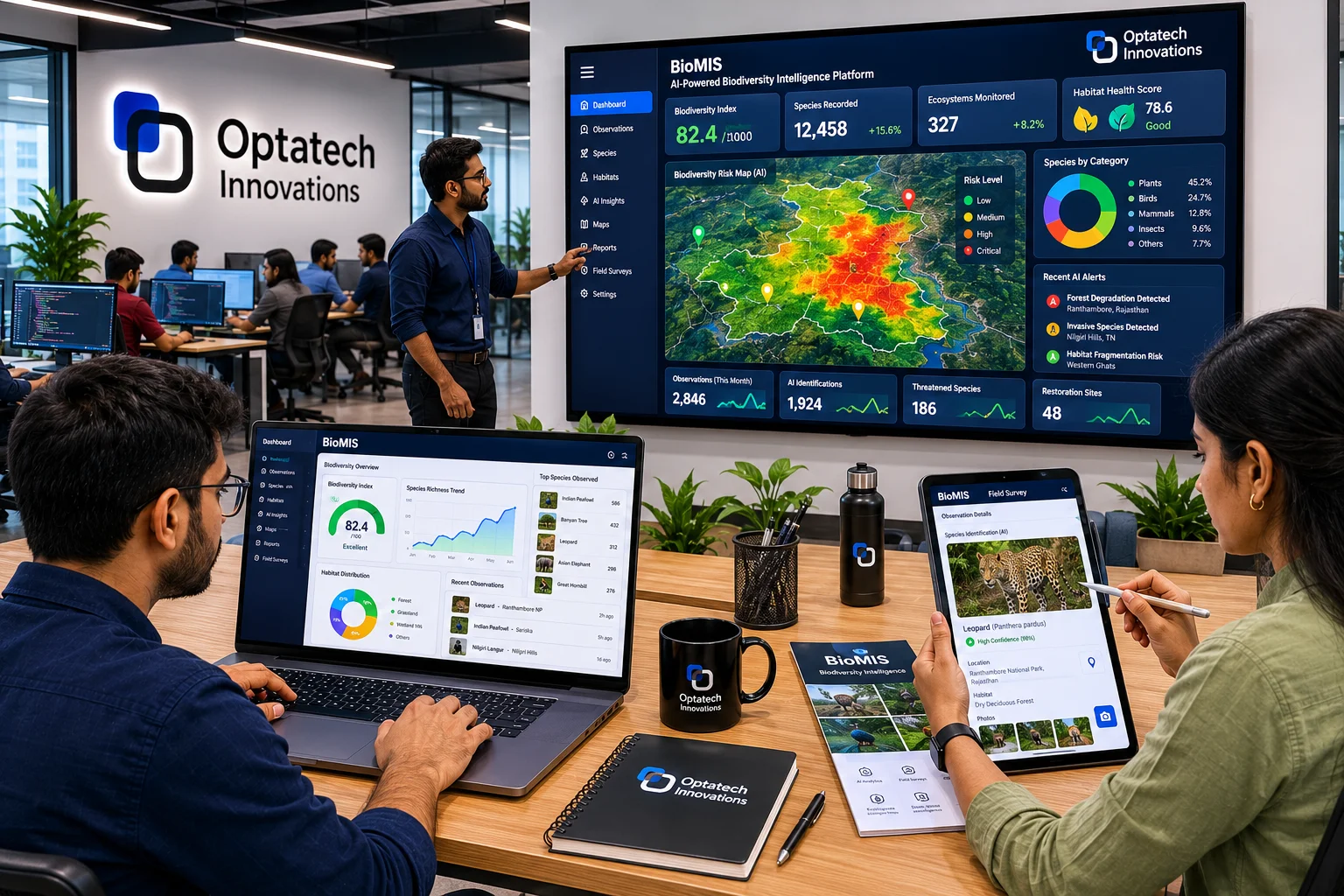
BioMIS is a biodiversity intelligence and monitoring system built for state-level environmental governance. The technical challenge wasn't the computer vision model itself — object detection on satellite imagery is well-understood. The hard part was building a pipeline that could ingest inconsistent satellite feeds, reconcile them with ground-truth camera trap data, and produce dashboards that non-technical government officials could actually use to make policy decisions.
We built the system on Python, TensorFlow, GDAL, and PostGIS for the geospatial processing layer, with a React frontend for the governance dashboards. The system now spans seven integrated intelligence layers, from species registries to wildlife corridor mapping. You can read the full breakdown on the BioMIS project page. The geospatial engineering underneath systems like this is its own discipline — we go deeper on that in our guide to building GIS and geospatial software.
FarmVision: Making Satellite Data Useful for Farmers
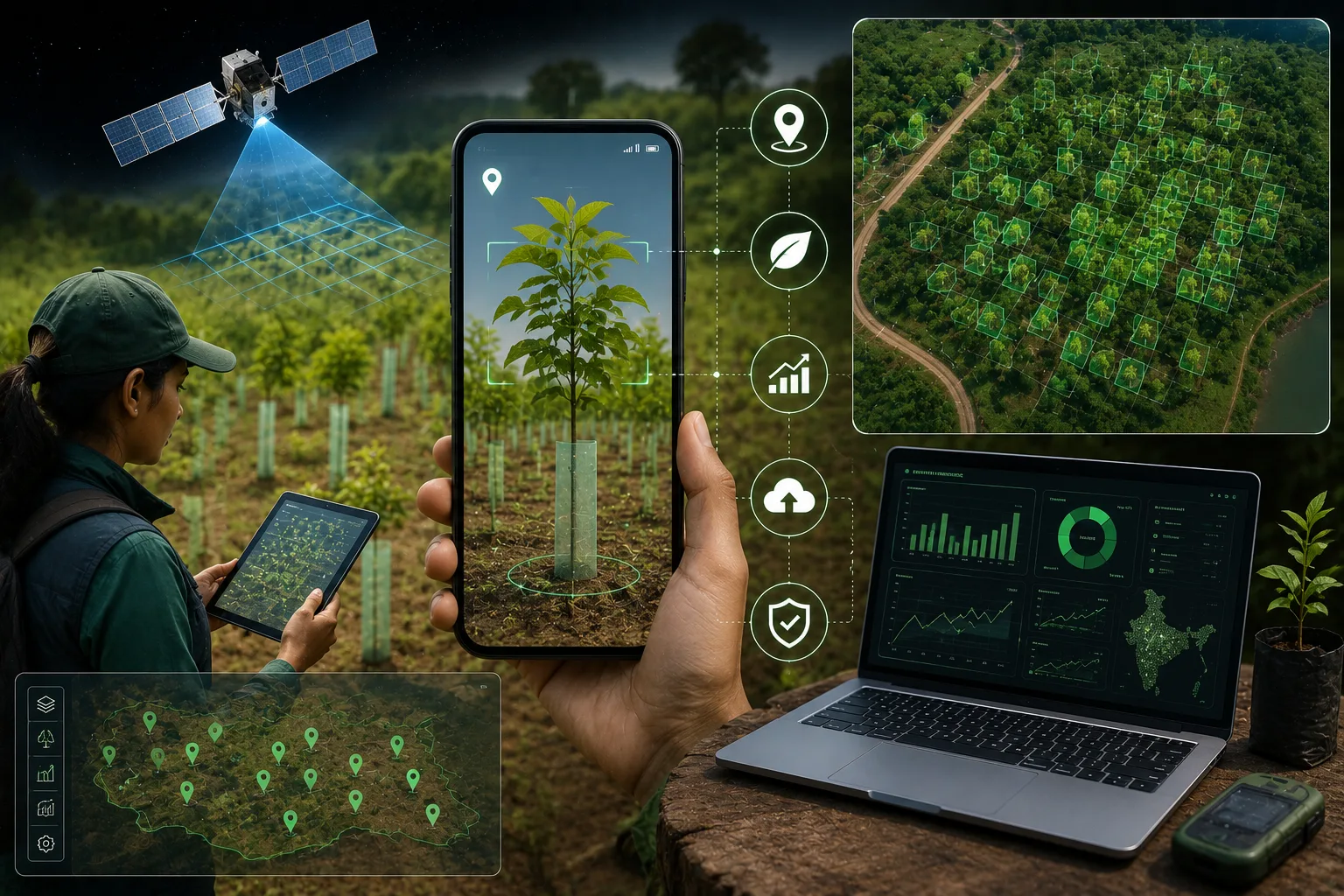
FarmVision combines satellite imagery, IoT soil sensors, and drone data to give farmers actionable crop intelligence — not raw data, but specific recommendations. The engineering challenge here was latency and accessibility: farmers in rural areas often have limited connectivity, so the app had to work with intermittent data sync and present information simply enough to act on immediately.
This is the pattern we see across most successful agri-tech AI: the model accuracy matters less than whether the farmer can actually use the output in the field. Details on the full system are on the FarmVision project page.
CarbonVerse: Turning Drone Imagery into Carbon Credits
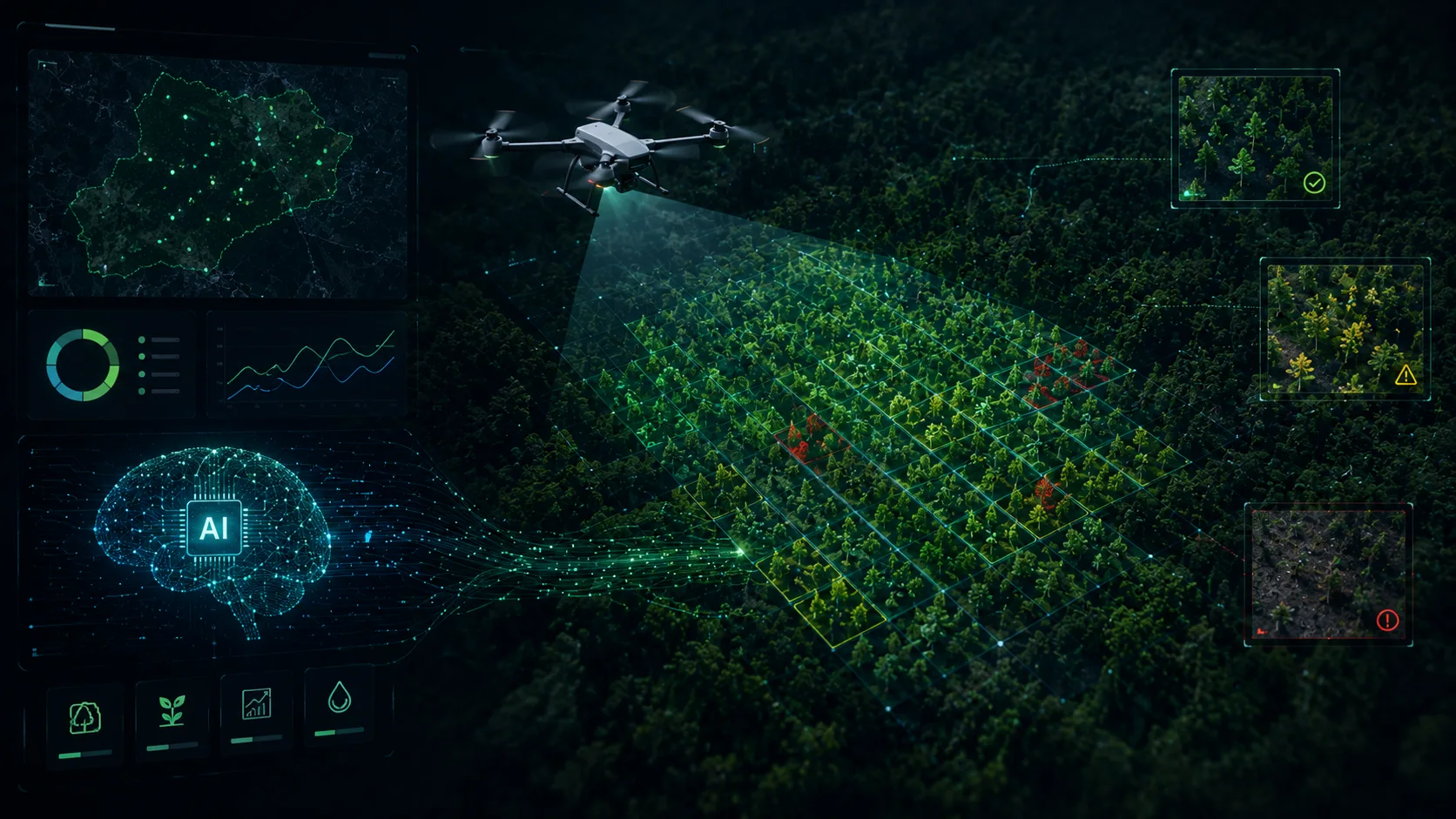
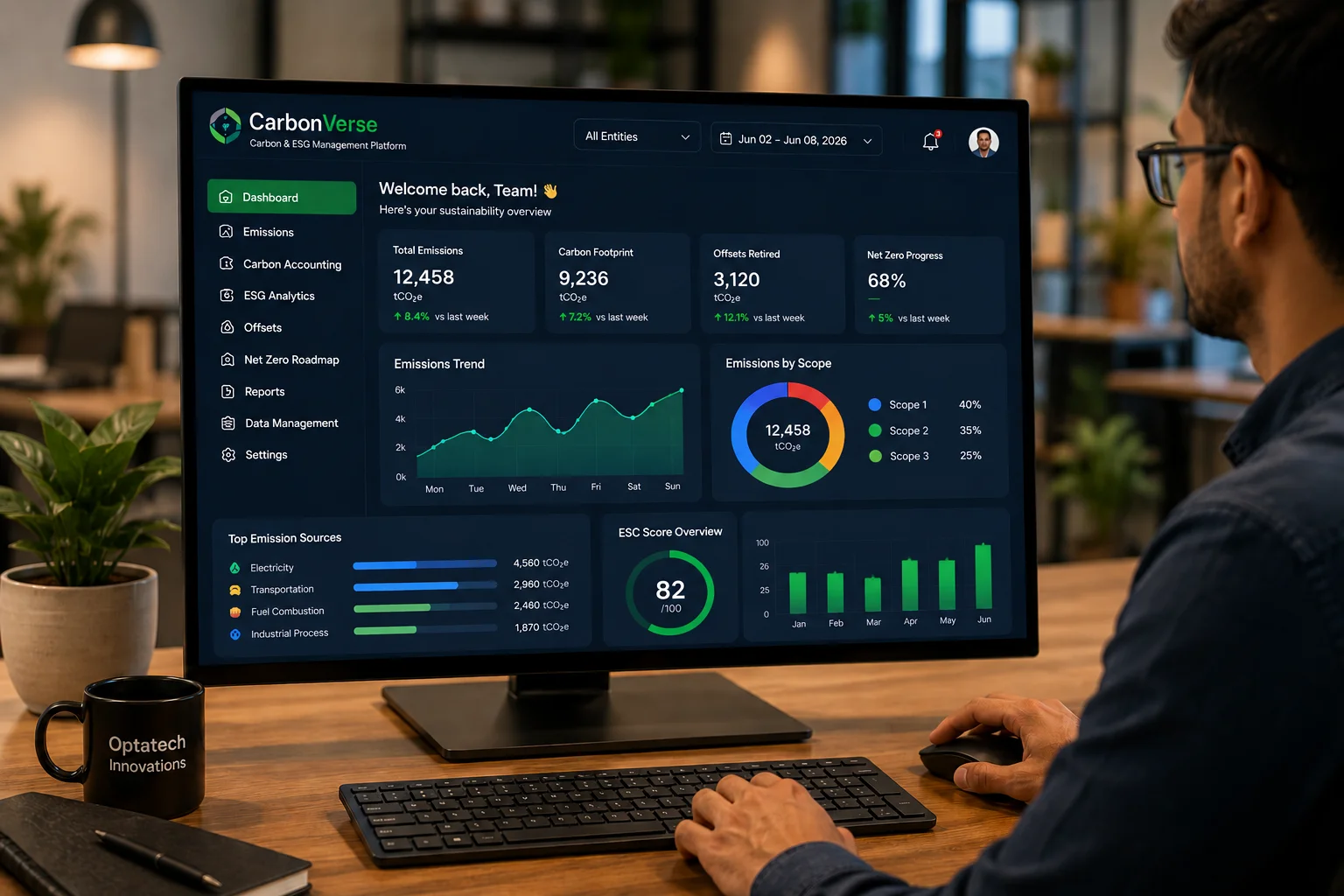
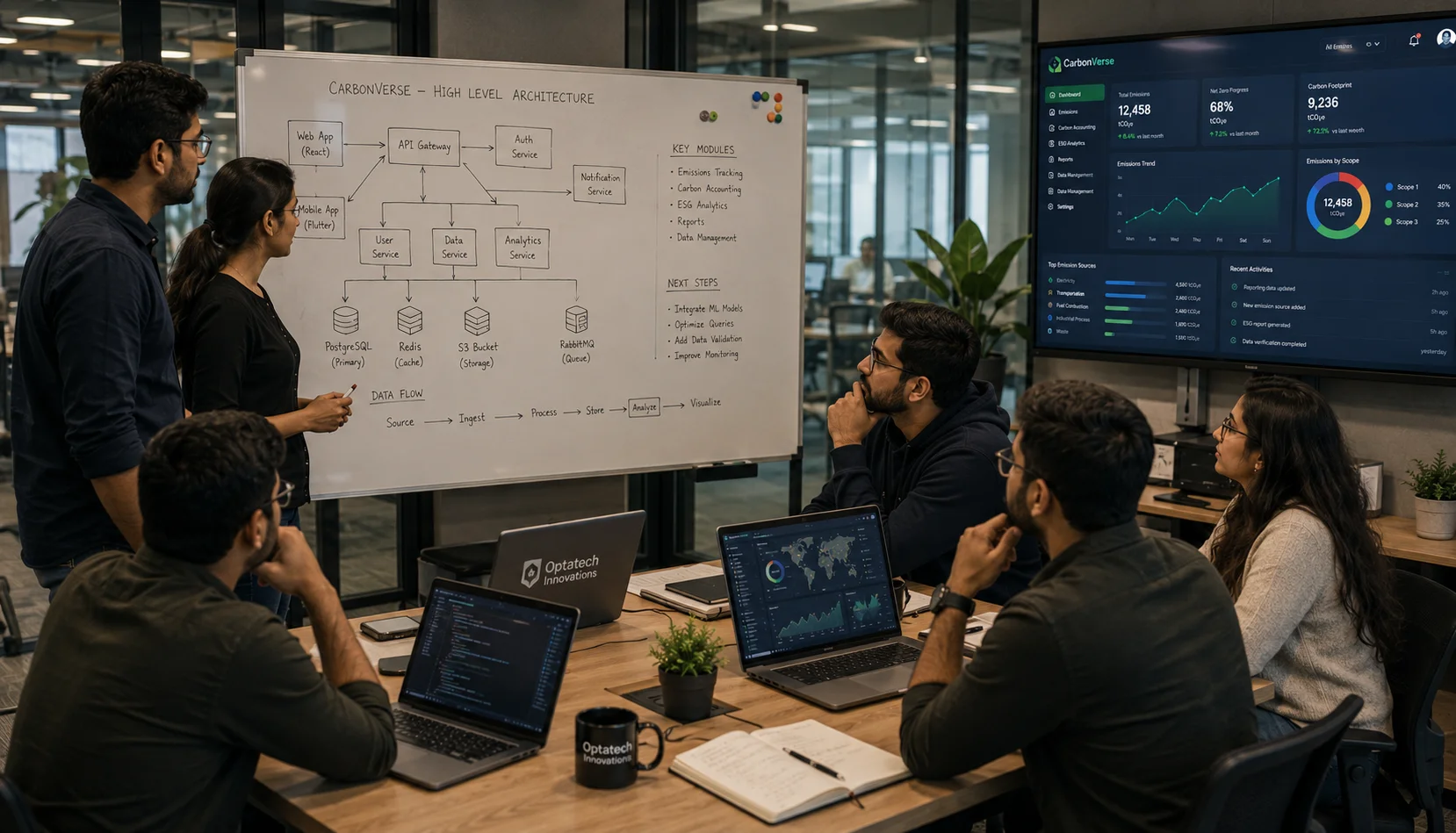
CarbonVerse is a carbon intelligence and plantation monitoring platform used by governments, corporations, and forest departments to quantify carbon sequestration at scale. The AI challenge here was tree-level precision: detecting and segmenting individual trees from drone and satellite imagery, classifying species, and estimating canopy height, crown area, and volume accurately enough to feed into carbon stock calculations that need to survive an audit.
Getting the computer vision right was only half the problem. The bigger challenge was aligning the whole pipeline with carbon accounting standards — IPCC guidelines, Verra VCS, Gold Standard — so the output isn't just a nice dashboard but something that can actually support real carbon credit issuance. That meant building verification-ready audit trails alongside the detection models, not as an afterthought. More on this in the CarbonVerse project page.
What Actually Separates Production AI from a Demo
Data pipeline resilience — production systems handle missing, inconsistent, or delayed data gracefully; demos assume clean inputs
Human-in-the-loop design — the best AI systems augment human decision-makers rather than replacing judgment entirely, especially in government and compliance-heavy contexts
Monitoring and drift detection — a model that worked at launch degrades over time as real-world data shifts; production systems need ongoing evaluation
Integration with existing workflows — an AI system nobody uses because it doesn't fit how people already work is a failed system regardless of accuracy
Clear ownership of edge cases — someone needs to own what happens when the model is uncertain, not just when it's confident
Common Questions About Production AI Systems
Why do most AI pilots fail to reach production?
Most AI pilots fail not because the models don't work, but because nobody solves the operational problems around them — data pipelines, edge cases, integration, and maintenance.
What makes an AI system production-ready instead of just a demo?
Production AI systems handle inconsistent data gracefully, include human-in-the-loop design, have ongoing drift monitoring, integrate into real workflows, and have clear ownership for edge cases.
What industries has Optatech deployed production AI systems in?
Environmental governance and biodiversity monitoring (BioMIS), precision agriculture (FarmVision), and carbon intelligence (CarbonVerse) — all currently in production.
Building Your Own Production AI System
If you're evaluating whether an AI idea is worth pursuing, the questions that matter most aren't about model architecture — they're about data availability, integration points, and who owns the system after launch. We start every AI engagement with a free discovery call specifically to work through those questions before committing to a build. Reach out at info@optatechinnovation.com or +91-8005758199, or see our full range of services on the Services page.
Ready to build something great?
Talk to Optatech — Jaipur's AI and software development company. Free 30-minute discovery call, no obligation.